
A prospect is sitting at their kitchen table. Their roof is leaking. They grabbed their phone, searched “roof repair near me,” found your site, and filled out the contact form. Name, phone number, email, description of the problem. They hit submit.
Now what?
For the prospect, the clock starts ticking immediately. They’re motivated right now. They want someone to call them back. If no one does in the next few minutes, they’ll fill out another form on another site. Or they’ll Google a different company and call directly. The urgency that made them submit your form is already fading.
For your buyer — the roofing contractor paying you for this lead — that form submission is worth money. But only if they get it fast enough to act on it. A lead that arrives in 30 seconds is a hot prospect. A lead that arrives in 3 hours is a cold call.
And for you — the lead seller — everything between the form submission and the buyer’s phone call is where money is either made or lost. Most lead sellers don’t think about this gap. They should.
The Journey of a Lead (And Where It Breaks)
Let’s trace what happens to a lead from the moment the prospect hits submit. At every step, there’s a chance for things to go wrong — and each failure costs you revenue, buyer trust, or both.
Step 1: The Form Submission
The prospect fills out your WordPress form and hits submit. The form plugin processes the submission, stores it in your WordPress database, and (depending on your setup) sends you an email notification.
Where it breaks: Nowhere, usually. WordPress form plugins are reliable. The data is captured. But this is just the beginning — having the data sitting in your WordPress database does nothing for your buyer. The lead exists, but nobody who can act on it knows about it yet.
Step 2: You Get Notified
Your phone buzzes. New email: “New form submission from [Your Site].” You open it, skim the details, and see a potential lead. Name, phone number, says their roof is leaking.
Where it breaks: This is the first major failure point.
Maybe you’re in a meeting. Maybe you’re asleep. Maybe you’re driving. Maybe you have 47 unread emails and this one blends in. Maybe your email provider sent it to the spam or promotions tab. Maybe you just don’t check your inbox for two hours because you’re working on something else.
Every minute that passes between the form submission and you seeing the notification is a minute wasted. The prospect is getting colder. And you haven’t even decided which buyer gets it yet.
Step 3: You Decide Who Gets the Lead
You check your buyer list. Who’s next in the rotation? Is this lead in the right area for Buyer A or Buyer B? Is this an exclusive lead or should you send it to multiple buyers? You try to remember who got the last lead. You check your spreadsheet, or your memory, or your gut.
Where it breaks: Manual routing decisions take time and introduce errors. You might send it to the wrong buyer. You might accidentally give the same buyer two leads in a row while another buyer hasn’t gotten one in three days. You might forget who’s on the shared list. And every minute you spend deciding is another minute the prospect is waiting for a call.
If you’re managing five buyers across two lead flows, this step might take you a minute or two. If you’re managing fifteen buyers across five flows, it’s a mess that eats into your day and still produces mistakes.
Step 4: You Forward the Lead
You copy the lead details from the email notification, open a new email (or text, or Slack message), paste the info, and send it to the buyer.
Where it breaks: More time lost. Copy-paste errors — wrong phone number, misspelled email, missing details. And the format is inconsistent — one time you include all the fields, another time you forget the zip code. Your buyer gets a messy email with no structure, no clear call-to-action, no one-tap way to call the prospect.
If you’re using Zapier, this step might be automated. But your buyer still receives it via email — which has its own problems (see next step).
Step 5: Your Buyer Gets the Lead
The lead finally arrives in your buyer’s inbox. Or their text messages. Or a Slack channel. Somewhere digital, mixed in with everything else competing for their attention.
Where it breaks: This is the second major failure point — and the most expensive one.
Your buyer is a roofing contractor. They’re on a job site, on a ladder, in a truck, in a meeting with another customer. Their inbox has 30 unread emails — vendor invoices, supply orders, spam, and somewhere in there, your lead. They might not see it for an hour. They might not see it until they sit down at the end of the day to catch up on emails.
By then, the prospect who filled out your form four hours ago has already talked to two other roofers and scheduled an estimate. Your buyer calls, gets voicemail, leaves a message that never gets returned. The lead is dead.
Your buyer doesn’t think “I got the lead too late.” They think “these leads are bad.” And that thought is the beginning of the end of your business relationship.
Step 6: Your Buyer (Maybe) Acts on the Lead
If the buyer does see the lead in time, they now have to manually extract the information. Open the email, find the phone number, tap it to call (or worse, switch to their phone app and type it in). If they want to check additional details — what service the prospect needs, their location — they have to scroll through the email again.
Where it breaks: Friction. Every extra tap, every extra step between seeing the lead and calling the prospect reduces the chance it actually happens. Buyers who receive leads in a clean, structured format with one-tap calling act faster than buyers who receive messy emails they have to parse.
The Cost of Every Minute
This isn’t theoretical. The data on lead response time has been studied extensively, and the findings are consistent: the faster you contact a lead, the more likely they are to convert.
Leads contacted within 5 minutes are dramatically more likely to turn into a conversation. After 30 minutes, the odds drop significantly. After an hour, you’re essentially making a cold call to someone who has already moved on.
For your buyer, this means every minute of delay in lead delivery directly reduces their conversion rate. Fewer conversions mean fewer closed deals. Fewer closed deals mean the buyer sees less value in your leads. Less value means they start questioning the price. And eventually, they cancel.
For you, this means every minute of delay in your distribution process is eroding your recurring revenue — one dissatisfied buyer at a time.
We explore all the reasons buyers leave in Why Your Lead Buyers Keep Churning.
Where the Money Actually Gets Lost
Let’s put specific numbers on this.
Say you generate 200 leads per month and sell them to 6 buyers. Each buyer pays $30/lead. That’s $6,000/month in revenue (simplified).
Now say your manual distribution process adds an average 45-minute delay between form submission and buyer notification. Some leads go out in 10 minutes, some in 2 hours, some not until the next morning. Average: 45 minutes.
With that delay, your buyers’ conversion rates are lower than they should be. Instead of closing 25% of leads, they close 15%. They’re paying $30 per lead but only getting value from 15% of them. Some buyers start to feel the math isn’t working. Over 6 months, 2 of your 6 buyers cancel.
Now you’re generating the same 200 leads but you only have 4 buyers. Your revenue drops from $6,000 to $4,000. You spend the next two months finding replacement buyers — giving away free trial leads, building new relationships, onboarding them. By the time you’re back to 6 buyers, you’ve lost $4,000-$8,000 in revenue.
All because leads sat in an inbox for 45 minutes.
To model what your operation should be generating, see How Many Leads Can You Sell Per Month.
What the Process Should Look Like
Now let’s trace the same lead through a system that’s built for speed.
Second 0: Prospect fills out your WordPress form and hits submit.
Second 1: Your WordPress form plugin detects the submission and instantly sends the lead data to your distribution system.
Second 2: The distribution system checks your rules — whose turn is it in the rotation, is this an exclusive or shared lead, does it match any segmentation criteria — and delivers the lead to the right buyer’s phone as an instant notification.
Second 3: Your buyer’s phone lights up. They see the notification: new lead, roofing, name and phone number visible. They tap it.
Second 4: The lead details appear — full name, phone, email, location, description of the problem. One tap to call. One tap to email.
Second 5: Your buyer is on the phone with the prospect. The prospect just submitted the form five seconds ago. They’re still at their kitchen table, still thinking about their leaking roof. They answer on the first ring because they were literally just holding their phone.
That’s the difference. Not 45 minutes. Five seconds.
The buyer closes the deal because they were first. They’re happy because your leads “work great.” They stay because the value is obvious. They tell their contractor friend about this amazing lead service they use. Your revenue grows instead of churning.
How to Fix Your Distribution Process
If you recognized your own operation in the first scenario — manual forwarding, email delays, spreadsheet routing — here’s what needs to change:
Eliminate the human bottleneck. You should never be a step in the distribution chain. The moment a lead enters your system, it should be on its way to the buyer’s phone without you touching it, seeing it, or even knowing about it until you check your dashboard later.
Stop delivering leads via email. Email is not a lead delivery channel. It’s where leads go to die. Your buyers need a dedicated app with instant notifications that cut through everything else on their phone.
Automate fair rotation. Manual routing introduces delays and errors. The system should automatically rotate leads through your buyers fairly — every buyer gets their share, no decisions needed from you.
Connect your forms directly to your distribution system. No middleware, no Zapier chains, no manual exports. Your WordPress form should connect directly to the tool that distributes leads. See our step-by-step WordPress setup guide to get started.
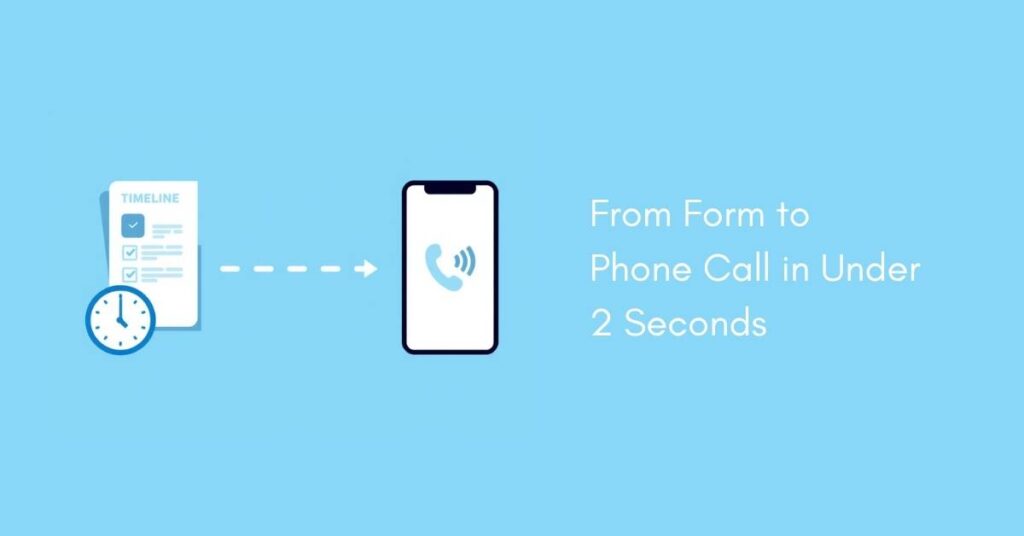
This is exactly what Easy Lead Distribution was built to do. ELD connects directly to your WordPress forms through plugins for Contact Form 7, WPForms, and ELD Forms. The moment a prospect submits your form, the lead is distributed to the right buyer’s phone in under two seconds. No manual step, no email, no delay. Follow our form connection guide for CF7, WPForms, and ELD Forms for the full walkthrough.
Your buyers receive leads as instant notifications on their phone. They tap to see the details. They tap to call or email. The whole journey — from form submission to phone call — takes seconds, not hours.
You set up your lead flows and distribution rules once. From that point on, it’s on autopilot. Leads flow 24/7 whether you’re awake, asleep, in a meeting, or on vacation. Your only job is to grow your business — generate more leads, find more buyers, expand into new verticals. Distribution is handled.
The Bottom Line
The gap between form submission and buyer phone call is where most lead selling businesses silently lose money. Not because their leads are bad. Not because their buyers are lazy. But because the delivery process adds minutes or hours of delay that kill the lead’s value before anyone has a chance to act on it.
Fix the gap. Eliminate the delay. Get leads to buyers’ phones in seconds, not minutes. Everything else in your business — buyer satisfaction, retention, revenue growth — improves when you fix this one thing.
Start your free trial at EasyLeadDistribution.com/Plans and see what under-2-second delivery looks like for your leads.